Case Study: Vanessa
From Spinning Out → Centered and In Control
Where We Started
When we began, Vanessa described their life as a whirlwind. Constantly overwhelmed and anxious, unable to follow through on their own intentions.
They were finishing a three-year Traditional Chinese Medicine program but kept avoiding the board exams that would let them actually practice. Meanwhile, they were deep in destructive friendships — relationships that left them feeling gaslit, undervalued, and stuck in drama they hated. These kept pulling them toward other addictions to soothe the pain.
"I have a lot to give," they told me, "but I don't feel like I can receive."
Growing up in a chaotic family system, Vanessa learned early that their feelings weren't welcome — and that managing other people's emotions was how they stayed safe.
In adult life, that pattern hadn't dissolved. They compulsively stuffed their wants and swallowed their limits. And rather than protecting them, it made them a match for relationships that mirrored exactly that: people who took everything and gave nothing back.
The Work We Did
In our first session, I noticed that whenever difficult feelings came close to surfacing, Vanessa bounced straight out of their body.
They were chronically anxious and distressed, but never actually feeling what was underneath. We sat with that tension for about ten seconds — and they dropped in. "I feel present for the first time," they said.
The pattern was clear: feel something uncomfortable, immediately escape into busyness, worry, or helping others. Never land. Never let it complete.
A few painful stories were holding all of it in place:
“Emotions are self-indulgent”
“Making myself small is the price of being acceptable”
One relationship was the main theater for all of it — a toxic friendship where Vanessa gave everything and received nothing. While substances were their numbing strategy of choice, the real thing they had to get sober from was the archetypal role they were compulsively playing: the Martyr. The one who gives everything and can't let anything in.
The real shift came when we started working with their anger.
Vanessa had learned young that anger was dangerous, so they'd shut it off entirely. But without a real relationship to anger, they lost access to NO — any limit they tried to hold had no weight behind it. And without a real NO, they couldn't say YES either. Letting people in felt too exposed when they had no way to protect themselves. So they couldn't get their needs met, and the cycle held.
We began doing movement work to let anger actually move through their body — unguarded, without inhibition. It was scary for them at first, but as the energy completed, a new feeling came online. They felt, maybe for the first time, that anger wasn't destructive. It was their drive to stop abandoning themselves. Their protective power.
Once they embodied that, new people showed up in their life almost immediately — people who were effortlessly loving and generous. Literally within a couple weeks.
The movement work also uncovered why they couldn't study for boards. There was old family pain wound into the act of studying itself — a parent had used homework as a means of control, and failing had become Vanessa's only available NO. Once we felt through those older feelings, the mythology lost its grip. "I'm literally excited for boards," they told me.
How Things Changed
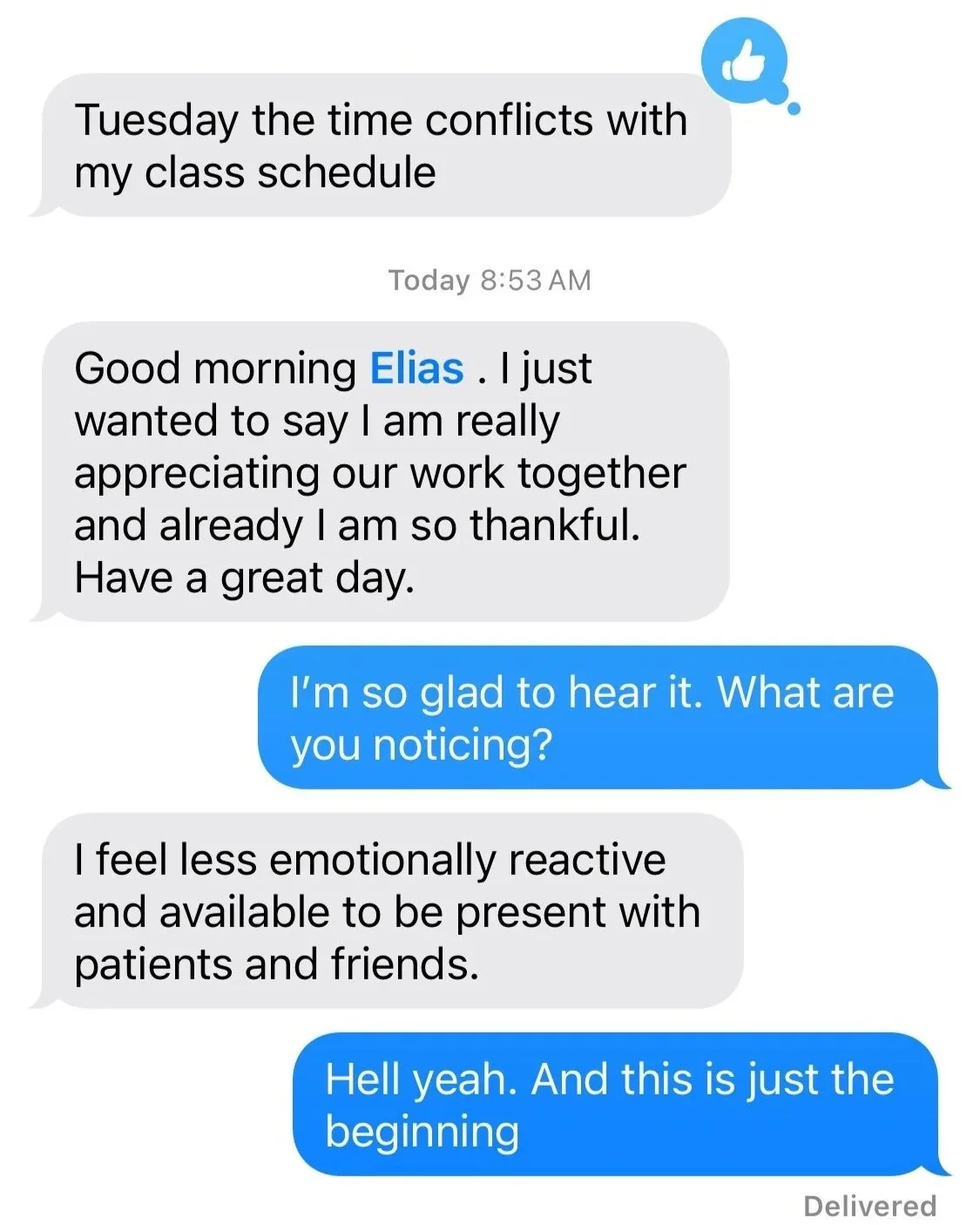
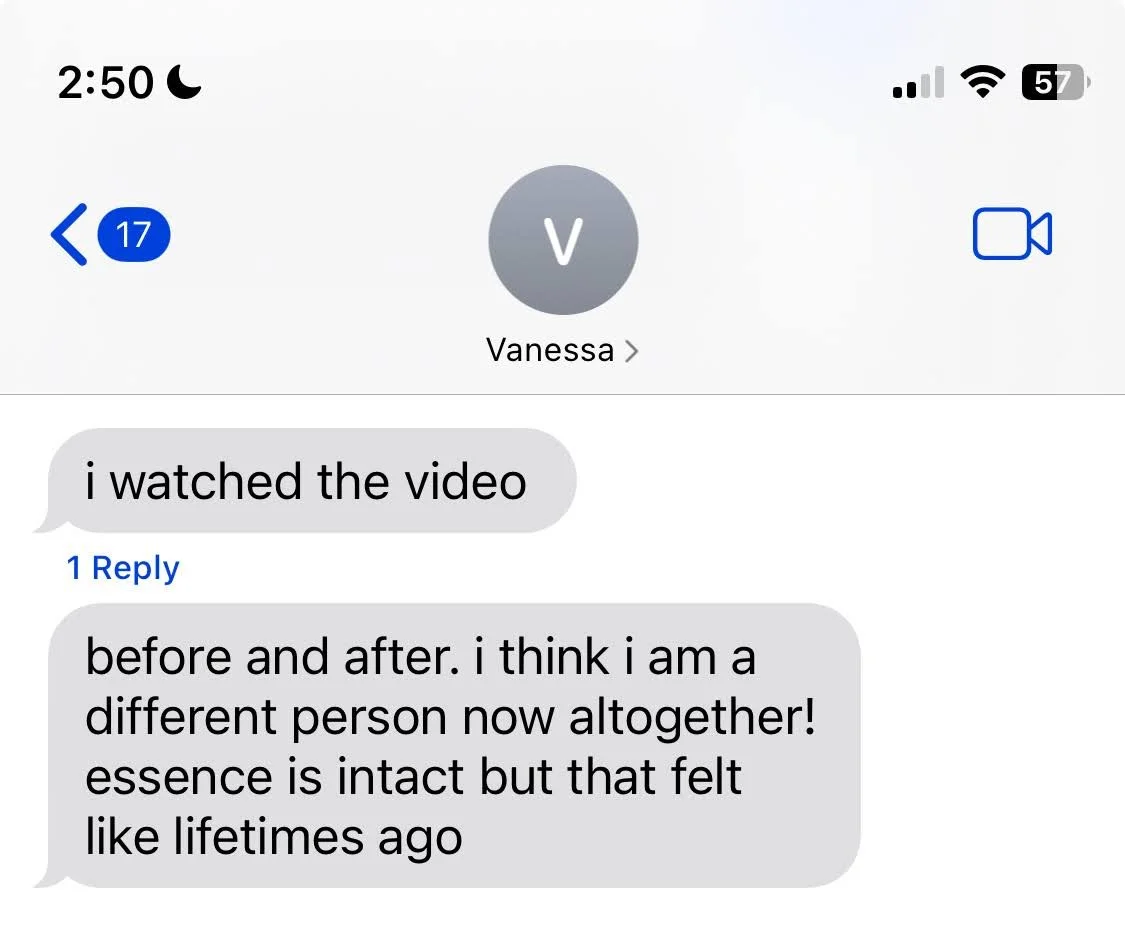
Six months later, Vanessa had shifted their internal relationship to core archetypes and healed generational relationships to their parents — and their external life reflected it:
Giving/Receiving: They learned to receive. Attracted many new friendships that are mutual and generous.
Yes/No: Befriending their anger gave them access to real boundaries. Counter-intuitively, this actually brought family and friends closer rather than chasing them away.
Victim/Agent: By feeling their feelings fully and letting those feelings complete — rather than dissociating from reality and what they were afraid was true — they began to feel their needs and intuitions again and stopped abandoning themselves.
Avoidance/Follow-through: From struggling to open a textbook to actually studying for their board exams.
Physical shifts: Back pain, stomach pain, nightmares—cleared once the repressed emotions moved through.
Exit interview:
"I feel more in control now. I know what I want. I feel able to say no. I'm not victim to my past or the things happening now."
________
Vanessa's patterns — people-pleasing, dissociation, avoidance — were held in place by unfelt feelings and the stories built around them to keep old wounds from being touched. Once those feelings were felt all the way through, the stories lost their grip.
Their natural capacity for boundaries, connection, and follow-through came back online. And with it, the friendships, family connections, and accomplishments they'd wanted.